A construction and C&D dumpster differs from a household cleanout box in what it carries: the load is heavier per cubic yard because framing, shingles, and masonry weigh far more than furniture. For that reason a…
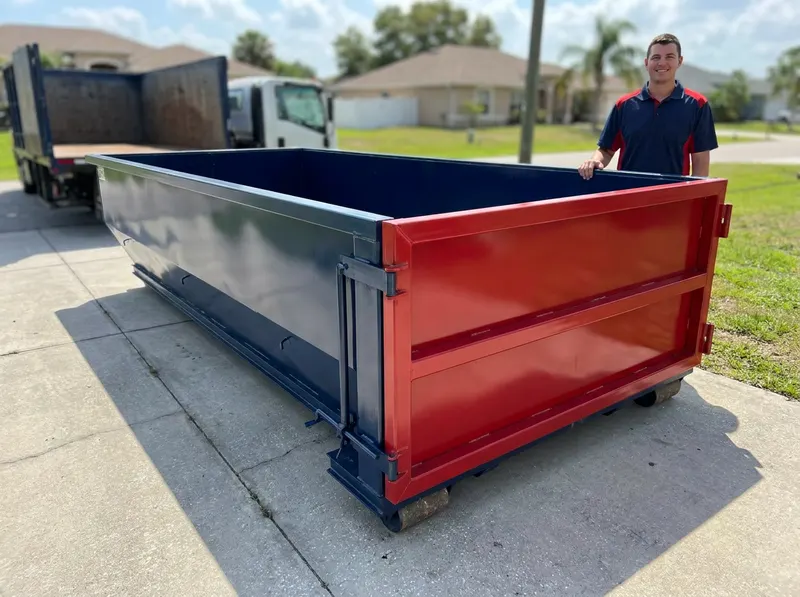
A construction and C&D dumpster differs from a household cleanout box in what it carries: the load is heavier per cubic yard because framing, shingles, and masonry weigh far more than furniture. For that reason a 10-yard container ($595) is often the right pick for concrete, brick, or tile even though it looks small, 10 cubic yards of hardened material approaches the weight ceiling of a roll-off, while lighter framing and drywall scrap fill a 20-yard ($695) or 30-yard ($795) before they get heavy. A dumpster rental is not junk removal; the crew loads it themselves, and the flat price covers the container, the haul, and disposal of construction and demolition debris under Florida's solid-waste rules described by the state's Department of Environmental Protection. Step 1: call or text a photo of the pile. Step 2: the owner recommends a size and confirms the flat price. Step 3: the container is delivered with boards laid under the wheels to protect the driveway. Step 4: the crew loads over the rental window. Step 5: pickup and disposal are scheduled on the day promised.
Decision fit follows the job. A single-room gut in Torino or Sandpiper Bay, cabinets, drywall, a small tile floor, usually fits the 10-yard or 15-yard ($650). A roof tear-off in Magnolia Lakes or PGA Village, where asphalt shingles pile up fast and heavy, is better matched to a 20-yard for a mid-size roof or a 30-yard for a full re-roof. Whole-house remodels and new-construction framing scrap in Tradition, Verano, or the newer stretches off Community Boulevard tend toward the 30-yard or the 40-yard ($895), the largest container, because bulky lumber and cladding eat volume before they hit weight. The trade-off is driveway footprint against debris volume: a 40-yard needs roughly 22 feet of clear straight-in space, while a 10-yard tucks into the tighter pavered drives common in Lake Charles and Southbend. Roofing debris in particular follows disposal guidance from the EPA's construction and demolition materials program, and asphalt shingle recycling data is tracked by Earth911.
Contractors reordering across St. Lucie West and the Tradition Field area keep the same flat-price schedule on every swap, which makes bidding a job simpler, the disposal line is a known number, not a surprise weigh-ticket. Certain materials are handled separately from mixed C&D: liquids, tires, and appliances containing refrigerant fall under household hazardous waste and manufacturer refrigerant rules, and clean fill dirt or concrete may need its own container to stay within weight. Jobsite placement follows the fall-protection and site-safety framing set out by OSHA's construction standards, and container weight limits trace back to road-load rules published by the Federal Motor Carrier Safety Administration">FMCSA. For public-right-of-way placement, a container that must sit on a street rather than a private driveway near projects around Clover Park or the MIDFLORIDA Credit Union Event Center, a permit may apply, so the City of Port St. Lucie and the St. Lucie County offices are the right point of contact. Landfill acceptance and diversion targets for construction debris are set through programs summarized by the EPA sustainable materials management guidance and the National Association of Home Builders waste-reduction resources.
Every job gets a firm, written price after an on-site visit.
Tell us about your construction & c&d dumpster rental job in Port Saint Lucie and we'll send a clear, written quote, usually the same day.
 Emily Dumpster rental